

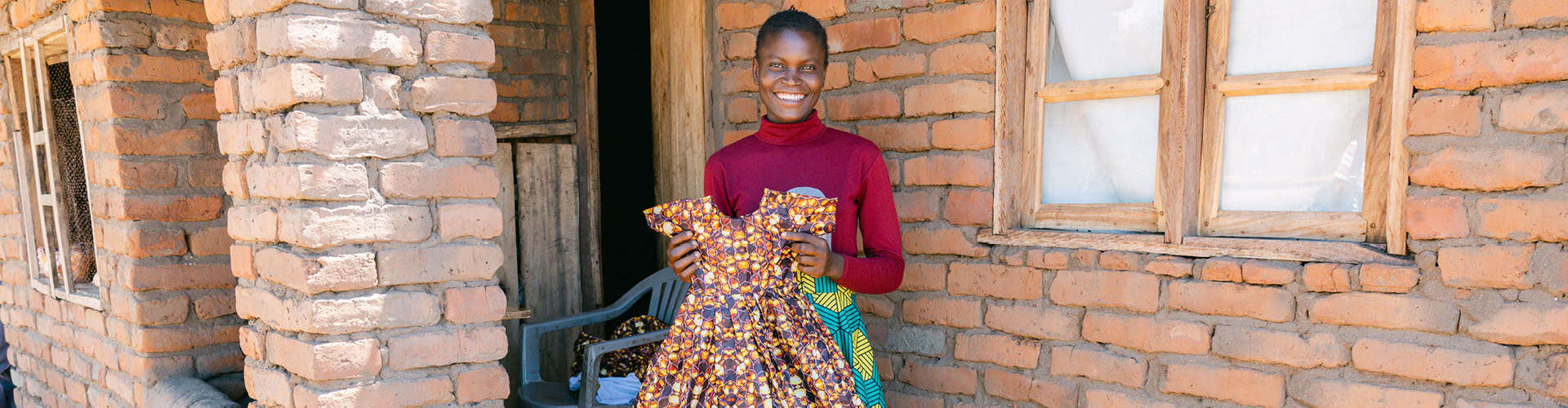
ZAINABU’S STORY: FROM LESS THAN $1 A DAY… TO MORE THAN $6!

ZAINABU’S STORY: FROM LESS THAN $1 A DAY… TO MORE THAN $6!
Meet Zainabu, a 20 year old from Malawi who is harnessing her entrepreneurial skills to build a future she has dreamt of.

At 20 years old, Zainabu has faced challenges most of us can barely imagine.
After the loss of one of her parents and abandonment by the other when she was just 14, she became the sole caregiver for her three younger siblings. With no farmland, a leaking home, and earning less than $1 a day from casual labour jobs in her community, she struggled to provide even one meal a day. Her siblings dropped out of school, and the family was isolated from their community.
Zainabu and her siblings live as what we call a Child-Headed Household. For children who have been orphaned, abandoned or live with a caregiver who may be unable to provide for the family due to disability, this responsibility typically falls on the eldest child. No matter their age, they face an enormous burden and are extremely vulnerable.
With the support of our Child Headed Households Programme, over the past two years, Zainabu has been able to build stability and resilience for her family, and thrive.
This involved four key steps:
- We introduced Zainabu to a trained volunteer in her community to become her acting guardian and mentor – someone responsible for providing guidance, counselling, protection and a helping hand at home. Guardians help young people living in Child-Headed Households to feel less isolated and lonely, and re-connect them to their communities.
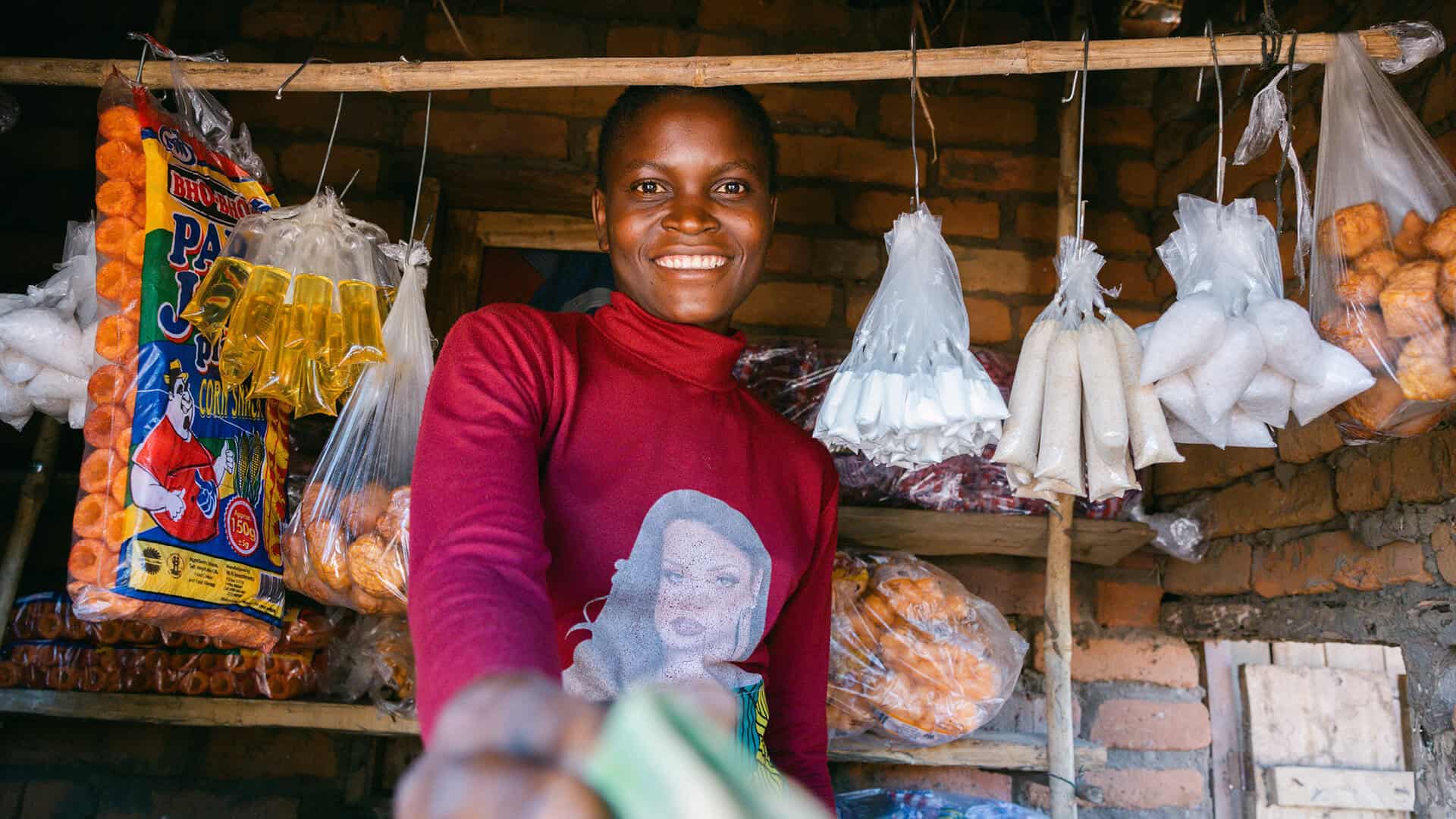
- We provided business training and start-up materials for her to safely earn an immediate income through her own grocery business. This means Zainabu can quickly afford necessities and begin to improve her family’s standard of living.

- We taught Zainabu agriculture skills and provided her with land and farming materials so that she could start to grow her own food and develop a reliable source of nutrition for the first time.
- We gave her vaccinated livestock and taught her how to safely care for and nurture these animals. Livestock are valuable commodities; they not only provide a source of both food and manure that can be used for fertiliser, they are also an economic safety blanket as they can be sold for a substantial price during difficult times.
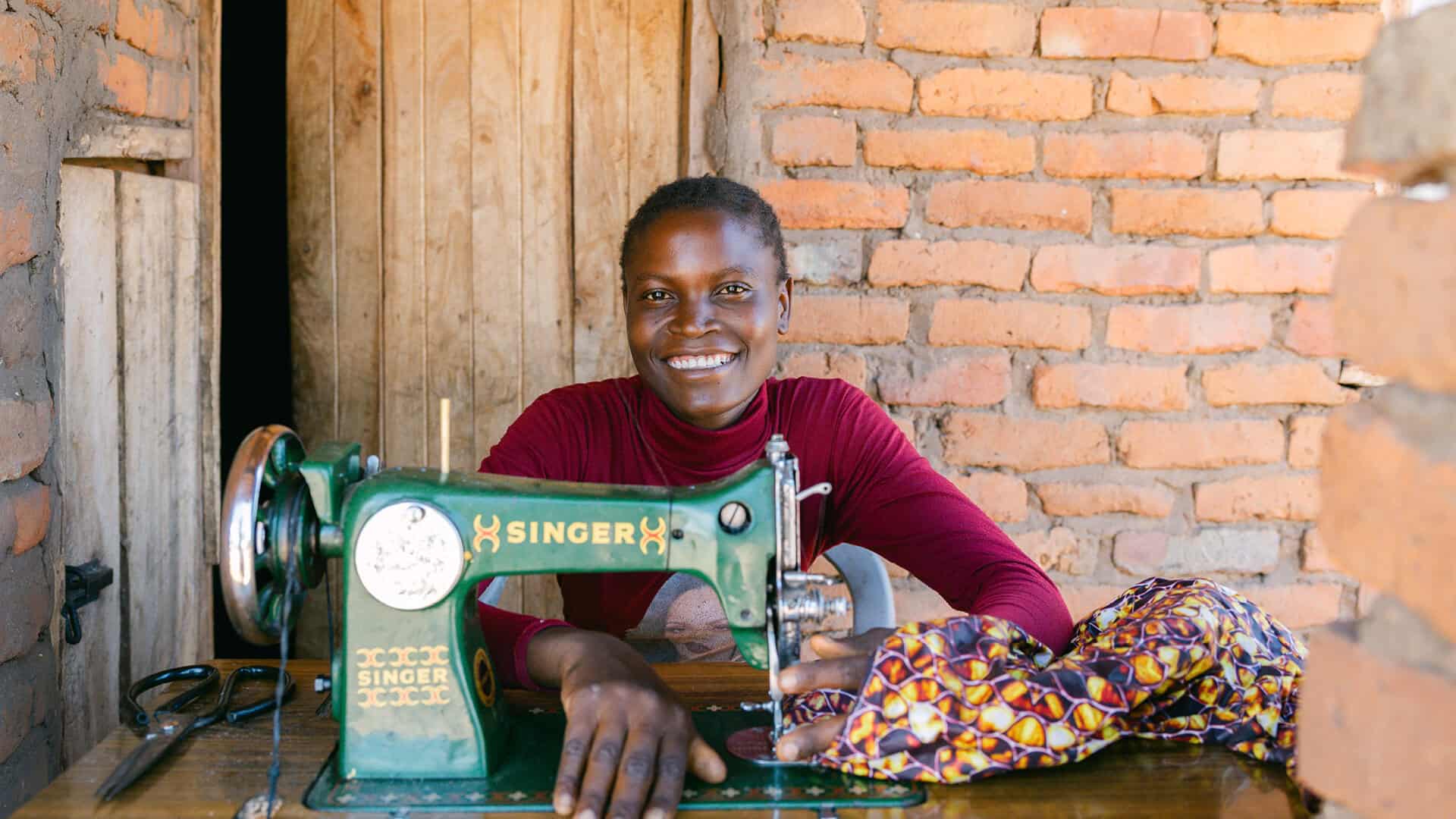
Zainabu then did what all good entrepreneurs do, she re-invested her profits in a sewing machine and materials, and diversified her income by setting up a second tailoring business.
Today, she earns 20,000 Kwacha a day – equivalent to $6 – which is above the $3 a day extreme poverty line. Most importantly, she has been able to send her siblings back to school full-time and provides them with daily meals, clothing, and stability.
Zainabu no longer faces exclusion and hardship, but independence and hope.
Looking ahead, she has even bigger plans of expanding her shop, buying a bicycle for transport, and building a new home for her family.
The support provided to Zainabu cost just £80 – creating exponential returns for her and her family. If you would be interested in making a donation and unlocking these opportunities for another at-risk young person, please click here.
Meet Zainabu, a 20 year old from Malawi who is harnessing her entrepreneurial skills to build a future she has dreamt of.
At 20 years old, Zainabu has faced challenges most of us can barely imagine.
After the loss of one of her parents and abandonment by the other when she was just 14, she became the sole caregiver for her three younger siblings. With no farmland, a leaking home, and earning less than $1 a day from casual labour jobs in her community, she struggled to provide even one meal a day. Her siblings dropped out of school, and the family was isolated from their community.
Zainabu and her siblings live as what we call a Child-Headed Household. For children who have been orphaned, abandoned or live with a caregiver who may be unable to provide for the family due to disability, this responsibility typically falls on the eldest child. No matter their age, they face an enormous burden and are extremely vulnerable.
With the support of our Child Headed Households Programme, over the past two years, Zainabu has been able to build stability and resilience for her family, and thrive.
This involved four key steps:
-
We introduced Zainabu to a trained volunteer in her community to become her acting guardian and mentor – someone responsible for providing guidance, counselling, protection and a helping hand at home. Guardians help young people living in Child-Headed Households to feel less isolated and lonely, and re-connect them to their communities.
-
We provided business training and start-up materials for her to safely earn an immediate income through her own grocery business. This means Zainabu can quickly afford necessities and begin to improve her family’s standard of living.
-
We taught Zainabu agriculture skills and provided her with land and farming materials so that she could start to grow her own food and develop a reliable source of nutrition for the first time.
-
We gave her vaccinated livestock and taught her how to safely care for and nurture these animals. Livestock are valuable commodities; they not only provide a source of both food and manure that can be used for fertiliser, they are also an economic safety blanket as they can be sold for a substantial price during difficult times.
Zainabu then did what all good entrepreneurs do, she re-invested her profits in a sewing machine and materials, and diversified her income by setting up a second tailoring business.
Today, she earns 20,000 Kwacha a day – equivalent to $6 – which is above the $3 a day extreme poverty line. Most importantly, she has been able to send her siblings back to school full-time and provides them with daily meals, clothing, and stability.
